






 |
 |
 |
 |
 |
 |
 |
 |
 |
 |
 |
 |
THE FIRST G7 FOREIGN MINISTERS' MEETING IN CAPRI


|
17 April 2024
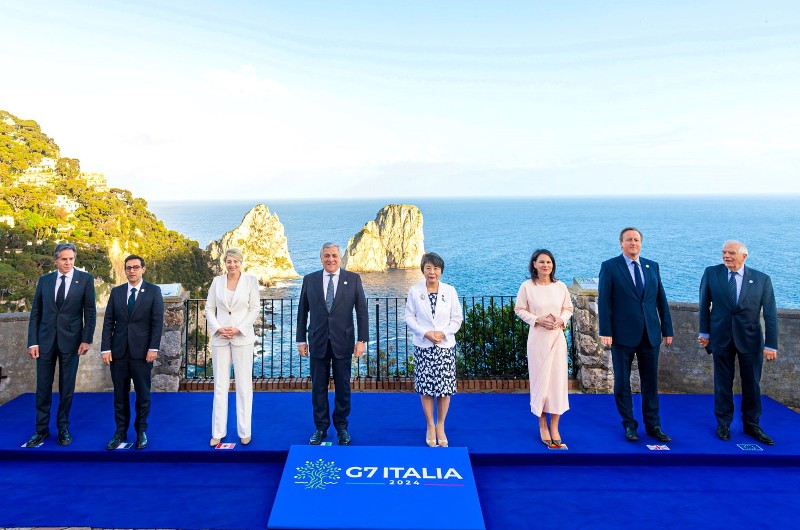 The first of two meetings of G7 Foreign Ministers that will be hosted in Italy in 2024 was held in Capri. As stated by the Deputy Prime Minister and Minister of Foreign Affairs and International Cooperation, Hon. Antonio Tajani, the aim is to strengthen the G7's role as the main forum for consultation among the major liberal democracies and as a factor for stability in the face of the major crises taking place at the global level.
The agenda therefore focused on the main issues at the centre of the international debate, starting with the situation in the Middle East. Among the topics discussed were the serious humanitarian crisis and the resumption of a meaningful and incisive political process for the "two peoples, two states" solution.
The worrying situation in the Red Sea also found a place on the G7 Foreign Ministers' agenda, with particular reference to the safety of shipping and the repercussions on trade routes, particularly to the Mediterranean.
The Italian Presidency also sought to renew cooperation with Africa in a spirit of mutual respect.
Although Israel's response to Iran disrupted the proceedings, major global issues also found their way into the debate. These included food security, energy security, the fight against climate change, cyber security and Artificial Intelligence, which opens up enormous opportunities but presents significant risks for humanity.
Secretary-General Michele Capasso, on his return from Gaza, was in Capri on 18 and 19 April, emphasising the role played since 1987 by the "United States of the World" in achieving "two Peoples in two States" with the historic visits of Arafat, Abu Mazen and Shimon Peres to Naples.
STEPHANE AND ANNE AT THE MUSEUM
|
12 April 2024
 Two Parisian friends, architects Stephane and Anne, visited all the Museum's emotional routes at length, fascinated by the uniqueness of the site.
Welcomed by President Michele Capasso, they lingered particularly over the 'Campania of emotions' route. At the end, they were presented with a museum catalogue.
APRIL AT THE MUSEUM: UNIQUE EMOTIONS!
|
31 March 2024
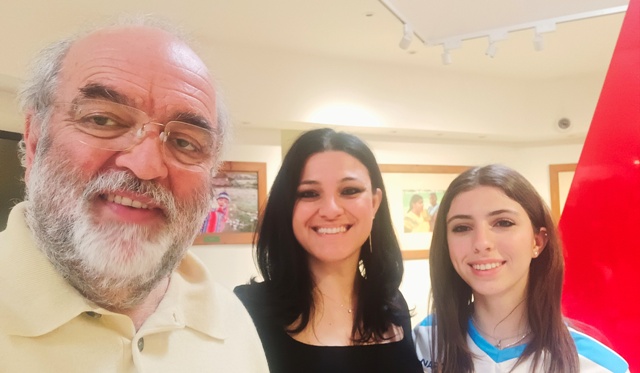 More than 5,000 visitors, mainly students from schools in the suburbs, visited the Museum of Peace over the Easter period and in April. Great appreciation for the emotional paths.
Just one example is the visit of Letizia Cordella accompanied by her daughter Viola.
THE MUSEUM OF PEACE CELEBRATES WORLD WATER DAY
|
22 March 2024
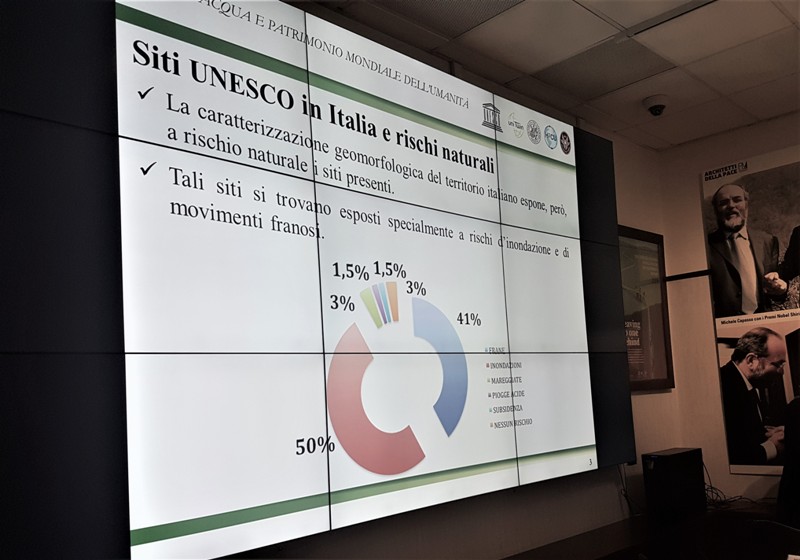 The United States of the World celebrated "World Water Day" in various cities on five continents.
In particular, at the institutional headquarters in Naples, Secretary-General Michele Capasso emphasised the urgency of protecting water resources, especially at this difficult time in human history characterised by wars, pandemics, social injustice and climate change.
The scientists present relaunched the United States of the World Appeal for universal collaboration to reduce drought disasters, using examples of good practice such as Israeli technologies for desalinating seawater.
A study day was held at the Cadi Ayyad University of Marrakech (CAU) with the theme "The UCA Dialogue - Regional Water Actors".
FRANCO ROL'S BOOKS ONLINE AVAILABLE FOR ALL
|
22 March 2024
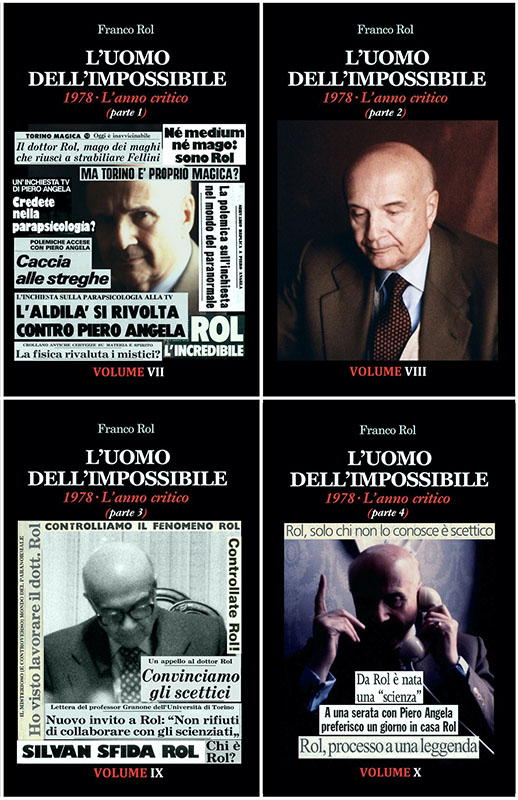 Franco Rol - distant cousin, witness and main extraordinary biographer of Gustavo Adolfo Rol (inspirer of the United States of the World) - with great generosity has made 4 full-bodied volumes on a fundamental phase of Gustavo Adolfo Rol's life available for all to read online. At the same time, he has made them available in a broader horizon, which also includes the controversy on the existence or non-existence of the so-called paranormal phenomena, on which there has been a debate for centuries without there still being an effective and accepted scientific demonstration.
It took 4 volumes of over 1,800 pages in total, in addition to the 2,700 of the previous 6 (the first 3 on Rol's phenomenology classified and commented, the other 3 on mainly unpublished or little-known texts and writings and contextual analysis, from the 1940s to 1977).
These new volumes collect a huge amount of unpublished information and analysis, documentary material on Rol and not only. They also analyse the genesis of the myth, because it is a myth, of "magic Turin", which no one has previously studied carefully and which arose at the beginning of the 1970s on the wave of the parapsychology and paranormal boom following the participation of Massimo Inardi, who had met Rol and held him in great esteem, in Mike Bongiorno's "Rischiatutto".
In the intentions of the author and writer Franco Rol, these volumes will be a first great tombstone on the sepulchre of the sceptics, or rather, of the sceptic-negationists, with a CRITICISM TO CRITICISM not on the level of faith or belief, but on that of reason and a correct investigative and ultimately scientific approach.
The "Rol case" represents a formidable paradigm at the precise point of convergence between science and religion, reason and intuition, intellect and heart.
UNITED STATES OF THE WORLD CELEBRATES THE DAY OF REMEMBRANCE AND COMMITMENT IN MEMORY OF THE VICTIMS OF THE MAFIA
|
21 March 2024
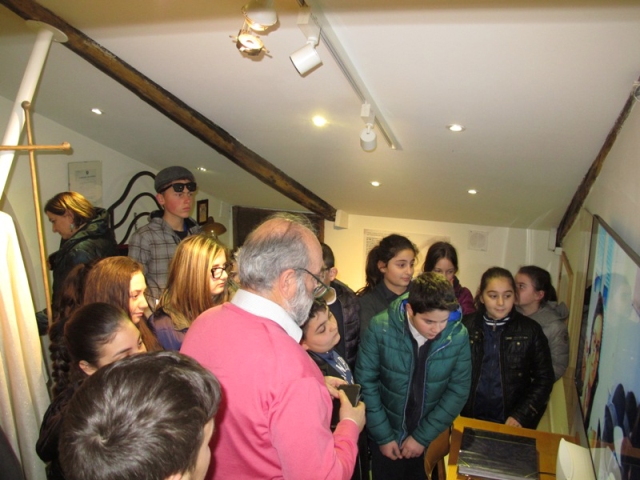 The United States of the World and the Museum of Peace celebrated the "Day of Memory and Commitment in Remembrance of the Victims of the Mafia".
The Secretary General of the United States of the World and President of the Fondazione Mediterraneo, Michele Capasso, was moved and emphasised the high symbolic significance of the day. He accompanied various groups of students on an emotional journey through the Museum, starting from the murder of Piersanti Mattarella to that of Don Diana: in the dedicated spaces, he recalled the familiarity with Don Peppe, the familiarity with mum Jolanda, with Don Luigi Ciotti and the gift made by the family to the Museum of Peace: the chasuble, the breviary and many other cherished memories of Don Peppe.
A delegation from the United States of the World took part in the march organised by Don Ciotti's "Libera" association in Rome.
RADIO CAPITAL INTERVIEWS SECRETARY-GENERAL MICHELE CAPASSO
|
19 March 2024
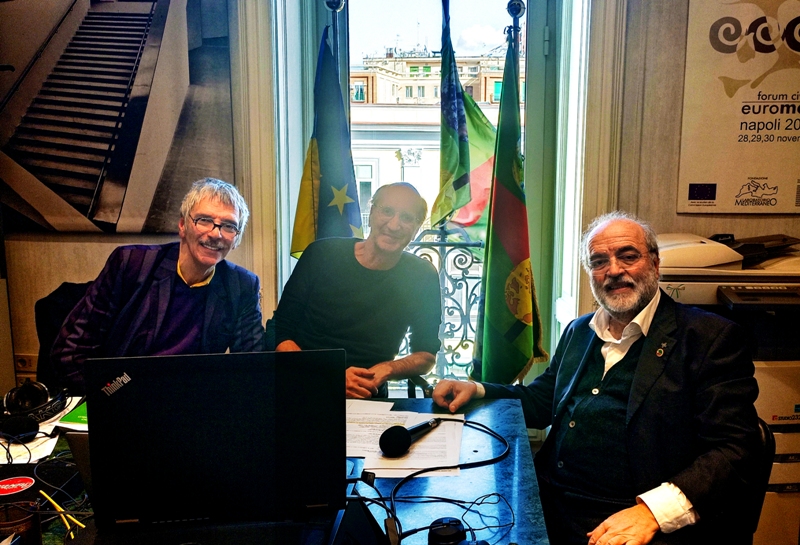 Radio Capital radiospeakers Paolo Damasio (aka Mixo) and Luca De Gennaro live from the Naples headquarters of the United States of the World and the Peace Museum interviewed Secretary-General Michele Capasso.
30TH ANNIVERSARY OF DON PEPPE DIANA'S DEATH
|
19 March 2024
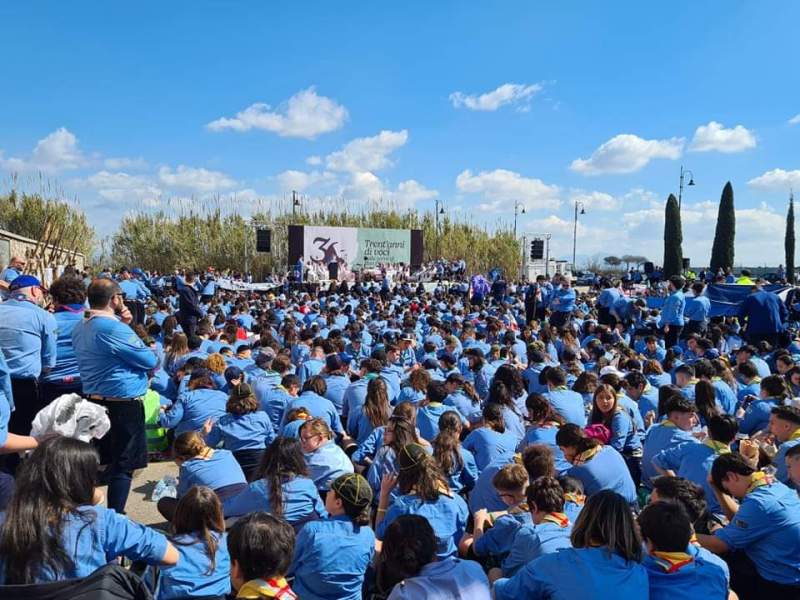 On 19 March, the 30th anniversary of the death of Don Peppe Diana was celebrated at the headquarters of the United States of the World and the Museum of Peace MAMT. In the itinerary dedicated to him - with precious gifts made to the Museum by his family - the main stages of his life were retraced. The theme of the 30th anniversary chosen by the Museum was one of his phrases: "There is no need to be heroes, it is enough to find the courage to be afraid, the courage to make choices and to denounce".
Over 1,000 visitors, mostly young people, continued to spread Don Peppe's message: "FOR THE LOVE OF HIS PEOPLE".
The Secretary-General Michele Capasso recalled the affectionate friendship with Mamma Jolanda, with Don Luigi Ciotti and with Don Peppe's siblings Marisa and Emilio.
PAOLO DAMASIO (MIXO) AND LUCA DE GENNARO VISITING THE MUSEUM OF PEACE MAMT AND THE SECTIONS DEDICATED TO PINO DANIELE AND MARIO MOLINARI
|
19 March 2024
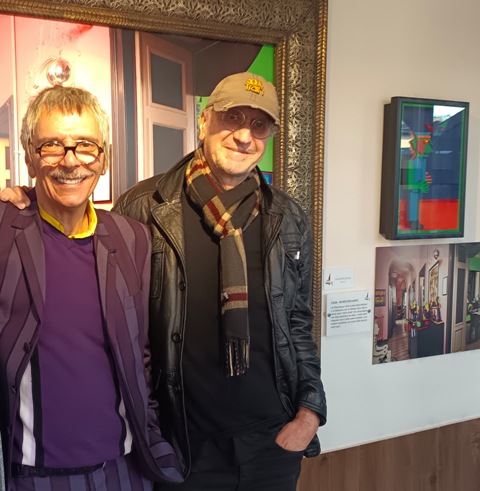
Paolo Damasio (aka Mixo) and Luca De Gennaro - radio presenters of RADIOCAPITAL with a very popular daily programme - visited the Museum of Peace MAMT and, in particular, the sections dedicated to Pio Daniele and Mario Molinari, on the occasion of their live broadcast from the United States of the World.
On this occasion Paolo "Mixo" recalled his long-standing sincere friendship with Pino Daniele and the exchange of acquaintances. Mixo is not only a musician with an important past.
Particularly moving was Paolo "Mixo's" recollection of Gustavo Rol - the creator of the United States of the World - who had his house close to Mixo's family home - and the sculptor Mario Molinari: a coincidence that he also emphasised in his interview with President Capasso.
PINO DANIELE DAY AT THE UNITED STATES OF THE WORLD AND THE MUSEUM OF PEACE
|
19 March 2024
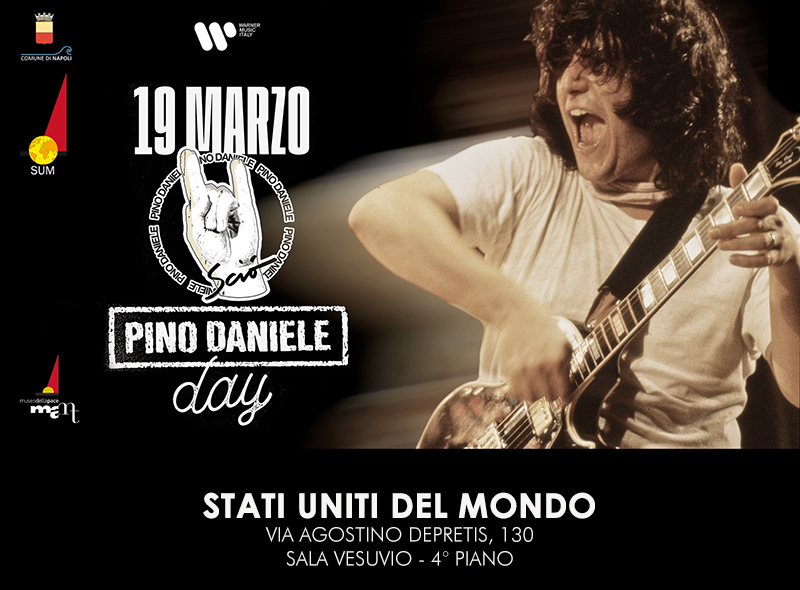 A special remembering day at the United States of the World headquarters, which, with the Museum of Peace, created in 2016 one of the 22 museum sections dedicated to the Neapolitan musician called "Pino Daniele Alive": an entire floor with a large number of memorabilia that actually belonged to the Neapolitan singer-songwriter.
"I'm very excited," said Secretary-General Michele Capasso, "because I still have in my memory Pino's last visit to the museum when he gave me and his son Alessandro the final instructions for completing a space where emotions, memories and hopes merge into a unique and unrepeatable whole precisely because it is a museum space created with Pino and can no longer be repeated.
Pino Daniele Day 2024 was co-organised with Warner Music Italy, which on this occasion celebrated the 40th anniversary of Sciò Live, the first live album of Pino Daniele's career, with recordings made during concerts between 1982 and 1984.
In the "Vesuvius Room" of the United States of the World - where pages of history have been written for the Earth and for Peace - Radio Capital speakers Luca De Gennaro and Paolo Damasio (aka Mixo) hosted the evening. After a greeting from Pino's historic press office, Riccardo Vitanza, and Alessandro Daniele, it was the turn of Renato Tanchis, head of the Warner Italia catalogue. Immediately afterwards, there was room for each of those present for memories and testimonies enhanced by the speeches of artists such as Lucariello, La Niña, Alex Uhlmann, Maso Maso, Carmine Aymone and many other producers and guests linked to the Neapolitan artist by personal memories and anecdotes. Protagonists of the talk, some live moments in an unplugged version performed by three young singer-songwriters: Neapolitan Alessandra Tumolillo, Greta Bragoni and Rosita Brucoli. On the ground floor of the Museum there will be a space for welcoming guests. On this occasion, Paolo Damasio - an admirer of Gustavo Rol, creator of the United States of the World - and Luca De Gennaro interviewed Secretary General Michele Capasso on the United States of the World.
The event was sponsored by the City of Naples.