






 |
 |
 |
 |
 |
 |
 |
 |
 |
 |
 |
 |
MEETING "QUEEN MARGHERITA OF SAVOY: ITALY’S FIRST INFLUENCER"


|
11 November 2026
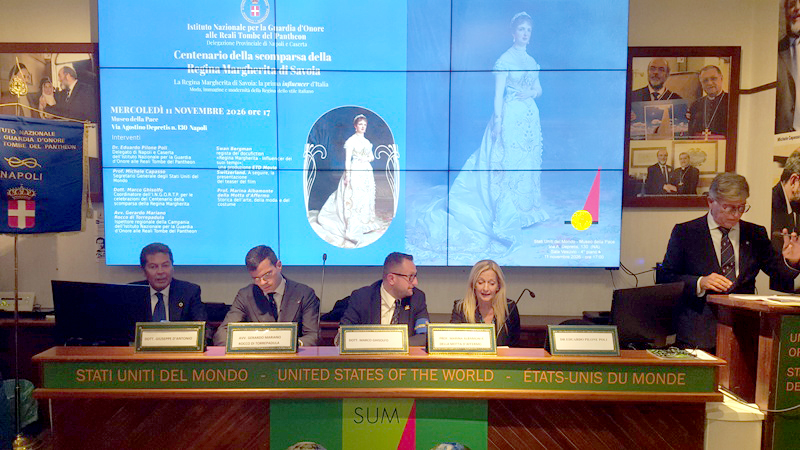
The event, organised by the Provincial Delegation of Naples and Caserta of the Guard of Honour at the Royal Tombs of the Pantheon, forms part of the programme of events organised throughout Italy to mark the centenary of the sovereign’s death. An anniversary of great historical and civic significance, it provided an opportunity to re-examine the figure of Margherita of Savoy beyond the usual clichés: wife of King Umberto I and the first Queen Consort of the Kingdom of Italy, the sovereign passed away in Bordighera on 4 January 1926 before being laid to rest in the Pantheon in Rome.
The event opened with greetings and institutional introductions by Dr. Eduardo Pilone Poli (Delegate of the Institute for Naples and Caserta), Prof. Michele Capasso (Secretary-General of the United States of the World), Dr. Marco Ghisolfo (INGORTSP Coordinator for the Centenary) and Mr Gerardo Mariano Rocco di Torrepadula (Campania Regional Inspector of the Institute).
There was unanimous appreciation for the institutional significance of the venue, which lent the ceremony great importance.
INTERNATIONAL YEAR OF AVERROES
|
11 November 2026
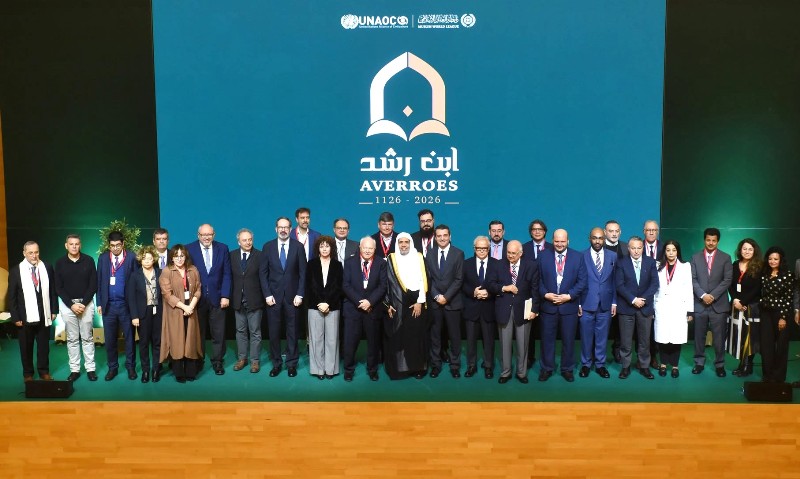 A delegation from the “United States of the World” and the “Fondazione Mediterraneo” took part in the meeting “International Year of Ibrahim Rushd / Averroes: An Opportunity for Reason” in Córdoba, which concluded with addresses by Secretary-General Miguel Ángel Moratinos, High Representative for the UNAOC and SUM Ambassador, and Ernest Urtasun Domènech, Minister of Culture of the Kingdom of Spain.
In his remarks, the Spanish Minister for Culture expressed his gratitude to the UNAOC and the Muslim World League – رابطة العالم الإسلامي – “for their global efforts to combat violence and to foster understanding and dialogue between our nations”.
Reflecting on the tradition of the city of Córdoba, he stated: “Here in the city of Córdoba, there is such a unique, rich and diverse foundation of mutual understanding and coexistence that we can truly feel the pulse of the universal here. This universality is the refined fruit of an Alliance of Civilisations that endures to this day…”
A musical performance by Kilema, also known as ‘Soul of Madagascar’, brought the day to a close following lively discussions on the legacy of Averroes and the enduring relevance of his message of peace and dialogue.
Dr Ismail Serageldin, co-chair of the Nizami Ganjavi International Centre and founding director of the Library of Alexandria – one of the founding members of the ‘United States of the World’ – delivered a significant speech, as did Professor Abdelhak Azzouzi, president of the SUM Council of Ambassadors.
The presence of Mohammad bin Abdulkarim Al-Issa, Secretary-General of the Muslim World League and SUM Ambassador, underlined the importance of the event.
THE POPE IN PERU: ‘I HAVE RETURNED TO MY HOMELAND; MUCH OF MY HISTORY BELONGS TO YOU’
|
11 November 2026
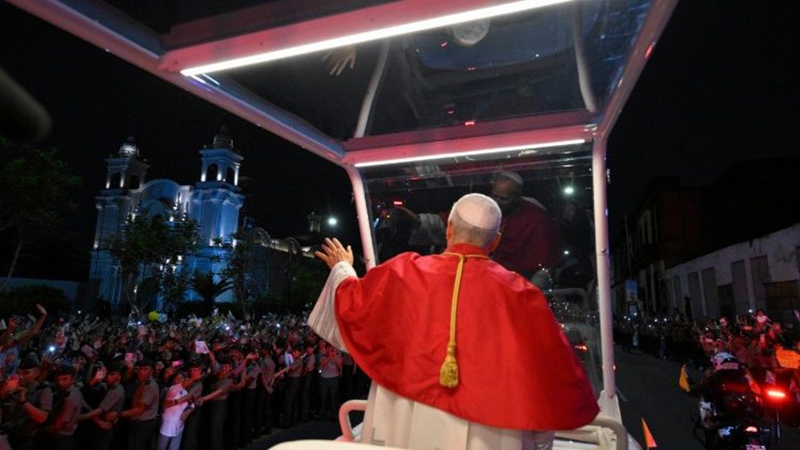 Robert Francis Prevost’s first words as Pope in the country that welcomed him as a missionary and bishop are filled with deep affection: “If I were allowed to relive those years, I would do so with joy”. Faces, conversations and Peru’s cultural diversity continue to accompany his Petrine ministry; from his throne, addressing the Diplomatic Corps, he recalls that public decisions “also affect those who live far from the places where they are taken”.
His longing for the traditional festivities of the Señor de los Milagros, for doors thrown wide open and for a good ceviche – the backdrop to “seemingly simple conversations in which the difficulties of a family or the hopes of an entire community would emerge” – can become the driving force behind a ministry – the Petrine ministry – which Robert Francis Prevost inaugurated on 8 May 2025, returning in spirit to the “beloved diocese of Chiclayo, in Peru”.
This evening, 11 November, the idea takes shape, and Pope Leo XIV returns to what he calls “my homeland”, a place he has called home for over twenty years. Acknowledging “how much of this land remains within me and how much of my own history also belongs to you”, he delivers a lengthy address to the local authorities at the Gran Teatro Nacional in Lima. It is precisely from the people of Peru that the Bishop of Rome confesses to having learnt the secret of good leadership:
To love a people means to wish that everyone might live amongst them with dignity, to take an interest in them, and to be willing to give of oneself for their good.
THE HOUSE FOR PEACE IN TURIN
|
09 November 2026
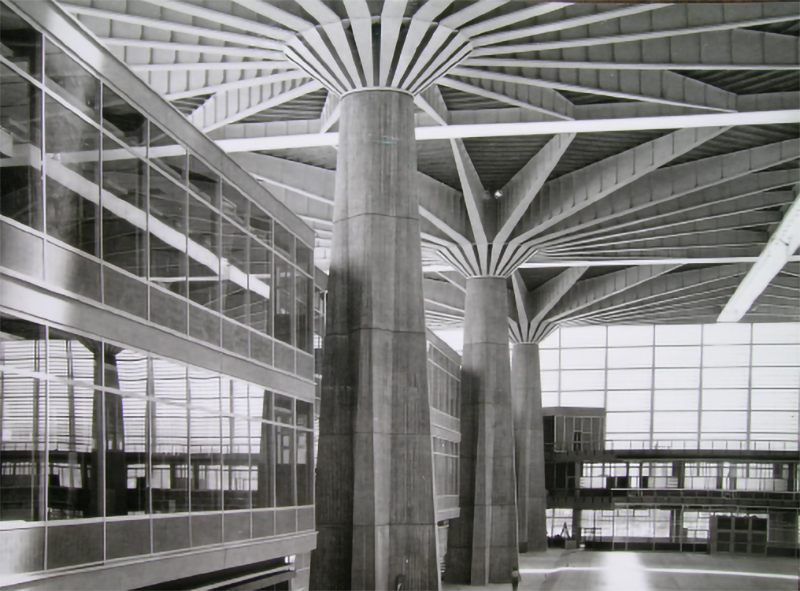
The "Council of Ambassadors" (BoA) and the Executive Board (EB) of the “United States of the World” – having met in Milan on 6 and 7 November 2026 – ratified the resolution passed by the BoA in Fez (Morocco) on 9 October 2026, concerning the construction of THE HOUSE OF PEACE in Turin. The proposal – sent on 9 November 2026 to the City of Turin, as well as to the Piedmont Region and the Italian Government – provides for:
- The repurposing of the “Palazzo del Lavoro” using resources made available by various countries.
- The restoration of the building designed by Nervi, transforming it into a global symbol of the ‘ecocene’ through unique and striking architectural solutions.
- The hosting of international events, featuring permanent representative spaces dedicated to each country, alongside regular presentations by each of them (‘France presents itself’, ‘Spain presents itself’, China presents itself, Morocco presents itself, etc.) in communal areas, such as the large tree-lined hall and all ancillary spaces, to showcase the country in the spotlight throughout the entire period, highlighting all its rich diversity: institutions, businesses, civil society, universities, museums, food, traditions, tourism and so on, the list goes on.
The ‘United States of the World’ working group – coordinated by Prof. Massimo Pica Ciamarra (CSI-CDM) and comprising leading architects and engineers from various countries – has drawn up a feasibility proposal for a project which, if realised, will serve as a global benchmark for its ability to transform the ‘Palazzo del Lavoro’ into an extraordinary eco-sustainable building in which regions, cities, universities, businesses, associations, civil society organisations and economic actors from 181 countries are represented, with the aim of promoting dialogue, mutual respect, collaboration and shared development.
“‘The House for Peace’ of the ‘United States of the World’,” said Prof. Abdelhak Azzouzi, Chairman of the Board of Directors, “represents a unique global network of relationships between states, institutions and civil society organisations; in the proposal approved for Turin, it can breathe new life into the Palazzo del Lavoro and give the city an international dimension.”
“The concept of ‘La Casa per la Pace’,” emphasises Prof. Massimo Pica Ciamarra, chair of the International Scientific Committee and head of the design team, “envisages an overarching framework capable of interconnecting energy, water, air, soil, vegetation, biodiversity, uses, emotions and social interaction. The extraordinary legacy of 1961 can become the starting point for a new cycle: from the great achievement of industrial civilisation to an Ecocene environmental infrastructure serving humanity. A structure that remains essentially unchanged can become something profoundly different: “THE HOUSE FOR PEACE”!”
“A number of countries – Spain, Portugal, France, the United Arab Emirates, Kuwait and others – have offered to build, at their own expense, the prestigious institutional headquarters of THE HOUSE FOR PEACE: it is up to Italy, Turin and Piedmont to form a ‘consortium’ to avoid bureaucratic deadlock and ensure the creation of an institution of great international significance”, concluded Prof. Ahmed Margoul, secretary of the Board of Directors.
POPE LEO XIV IN ARGENTINA
|
08 November 2026
 A delegation from the “United States of the World” and the “Fondazione Mediterraneo” accompanied the Pontiff on his Apostolic Journey to Latin America: the second stop was Argentina, where he paid tribute to Pope Francis.
“I felt deeply moved,” says Secretary-General Michele Capasso, “to see Pope Leo XIV standing before the plaque commemorating Pope Francis, in the cathedral where he served until 2013, when he was elected Pope, and to which he has never returned. This trip to Argentina was full of events, the most moving of which was the pilgrimage to the Shrine of Luján.”
There is emotion, gratitude, a sense of familiarity and belonging, and also the memory of his predecessor Francis, in the words with which Leo XIV takes his leave of Argentina, the country that welcomed him as a pilgrim from 8 to 11 November. With the Mass at the Shrine of Luján, mother and patroness of all Argentinians, at the foot of the imposing neo-Gothic basilica – a destination for ceaseless pilgrimages – the Pope bids farewell to this noble country which, as he states in his closing address, welcomed him “with such affection”.
“Thank you, Argentina, for welcoming me with open arms!”
Arms wide open, just like those of the millions of people who have taken part in the papal events over the last few days. Almost six million, if we do a quick calculation, including the two and a half million faithful at the Mass for Families in Buenos Aires and the one million young people at the vigil – both held at the Monumento de los Españoles – then the 650,000 at the celebration in Córdoba and, finally, the more than two million today in Luján. Not to mention the hundreds of thousands of people who took to the streets to welcome the Successor of Peter. Images that certainly remained etched in the Pope’s mind during his tours in the popemobile or covered car.
POPE LEO XIV IN URUGUAY
|
06 November 2026
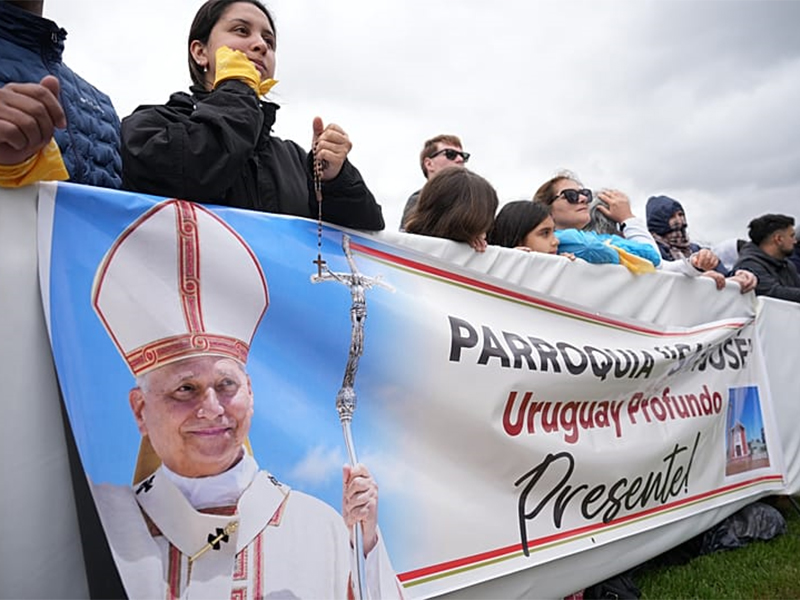
A delegation from the “United States of the World” and the “Fondazione Mediterraneo” accompanied the Pontiff on his Apostolic Journey to Latin America: the first stop was Uruguay, where he was welcomed by 40,000 people in Paysandú.
“We are delighted that, less than a month after being admitted to the Gemelli Hospital in Rome, Pope Leo XIV was able to undertake this Apostolic Journey,” said Secretary-General Michele Capasso, “and it is of great significance to us that the first stop is Uruguay, one of the first countries to join the ‘United States of the World’ thanks to the vision and greatness of a remarkable man: José Mujica, President of Uruguay, to whom we awarded the Mediterranean Prize for his dedication to the people and their needs.”
During his sixth Apostolic Journey, Pope Leo XIV stopped off in Paysandú, Uruguay, where he celebrated Mass at Parque París Londres before thousands of the faithful.
Upon his arrival at the altar, flanked by the image of Blessed Jacinto Vera, he centred his entire homily on the key concepts of unity and community.
“Peace is possible and we are called to build it,” said the Pope during his homily, offering all of us present three symbols characteristic of Uruguay to illustrate how to safeguard and spread the Christian faith today and, with it, peace.
The first was the “General Artigas” bridge, a metaphor for the importance of building strong bonds and engaging in dialogue with one’s neighbour. The second is represented by the local palm trees, which grow together in groves, symbolising the communal nature of the Church. Finally, there is mate, the famous traditional drink shared during gatherings, evoking a profound sense of familiarity and brotherhood.
The day’s programme continued with a packed schedule of institutional and pastoral engagements. Following the liturgy in the park, he visited the Basilica of Our Lady of the Rosary for the unveiling of a commemorative plaque and to greet the faithful outside the building. Subsequently, the Pontiff left the city of Paysandú to travel to the capital, Montevideo.
RARE GLASS WORKS ACQUIRED FOR THE MUSEUM OF PEACE - MAMT
|
06 November 2026
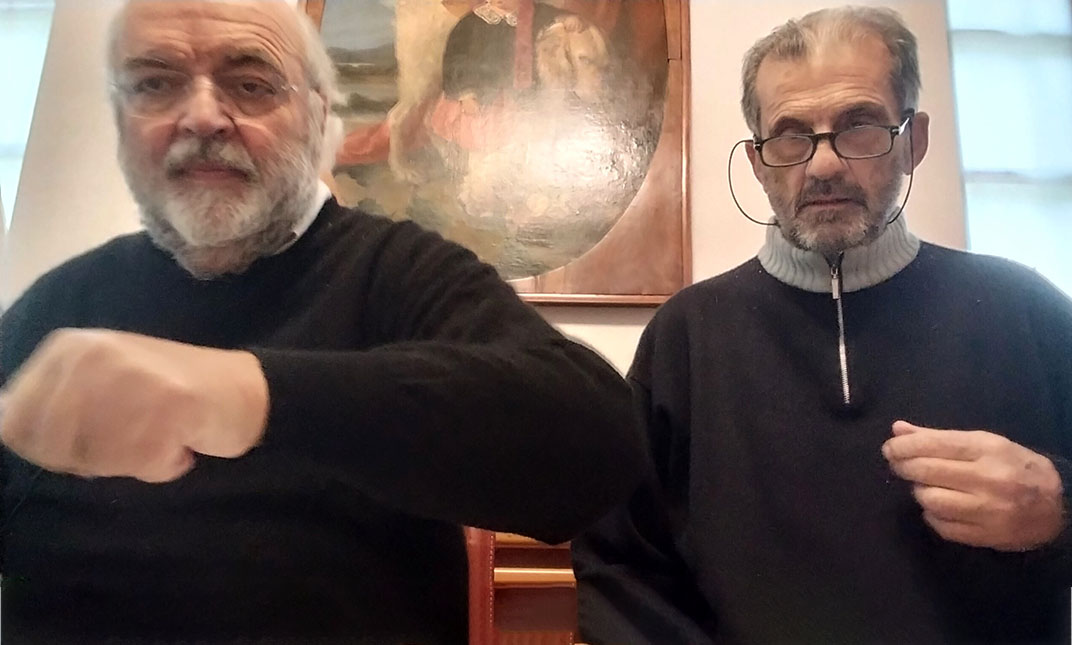 Thanks to co-funding from the Campania Region as part of its support for regional museums for the year 2026, it has been possible to acquire six rare glass works at a ‘special’ price from the international collector Dr. Sandro Pezzoli.
The works were created by international artists from Sweden, Australia, Murano and other countries.
The deed of transfer was signed on 6 November 2026.
INTERCULTURAL INNOVATION HUB
|
03 November 2026
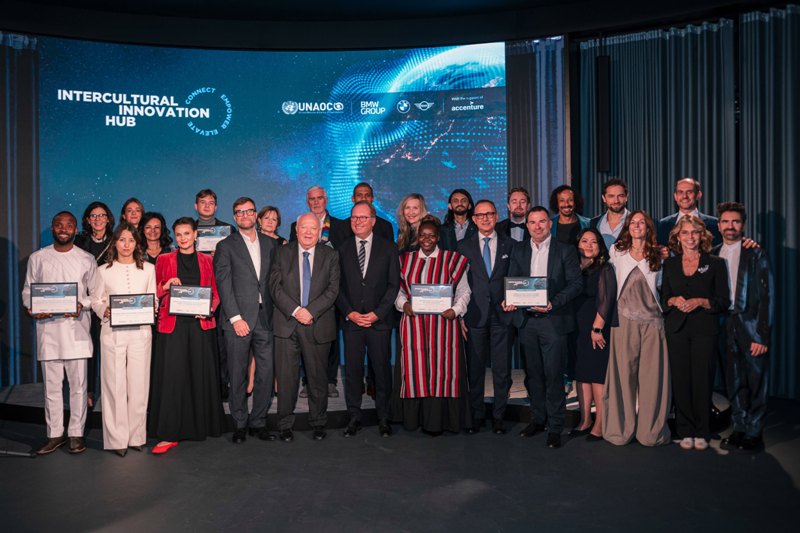 A delegation from the United States of the World and the Museum of Peace attended the Intercultural Innovation Hub (IIH) during a ceremony held at the BMW Group Italia headquarters in Milan.
As one of the flagship programmes of the United Nations Alliance of Civilisations (UNAOC), developed in partnership with the BMW Group and Accenture, the Intercultural Innovation Hub celebrated two significant milestones: 15 years of recognising and supporting grassroots initiatives, and more than 100 projects highlighted globally. These projects use innovative, community-based approaches to foster empathy and dialogue across differences, challenge stereotypes and harmful narratives, and expand access and opportunities, thereby creating more inclusive and peaceful societies for all.
This year, the IIH has selected organisations from Chile, Colombia, Ghana, Greece, Kyrgyzstan, Nigeria, Pakistan, Romania, South Africa and Spain. Their projects range from promoting social inclusion to empowering women; from using art, culture and sport to drive social change to utilising artificial intelligence and new technologies to promote peace.
FIRST MEETING OF THE “COUNCIL FOR INTERNATIONAL STUDIES IN CULTURAL PERSPECTIVE AND CREATIVE INTELLIGENCE”
|
28 October 2026
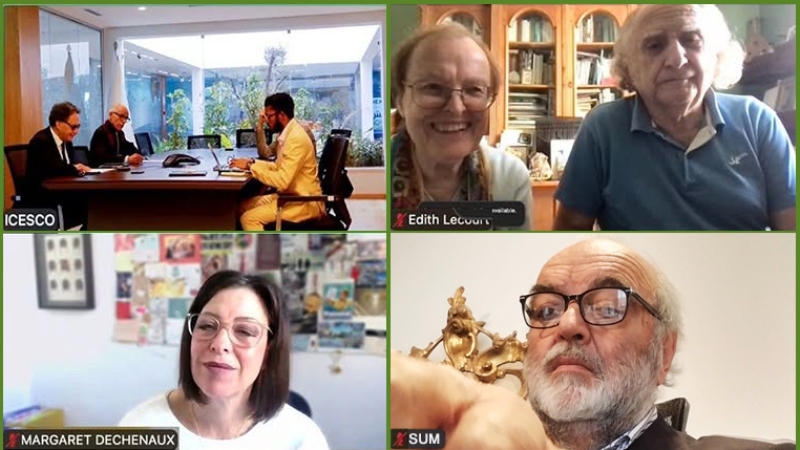
The “United States of the World”, together with the “Fondazione Mediterraneo”, is one of the 20 global institutions forming part of the “Council for International Studies in Cultural Perspective and Creative Intelligence” launched by the World Islamic Organisation for Education, Science and Culture (ICESCO), under the coordination of the head of ICESCO’s cultural sector and former Tunisian Minister for Cultural Affairs, Mohamed Zinelabine.
This large-scale global project was formalised during a webinar organised by ICESCO: it is an unprecedented initiative, marking the first time on an international scale that such a programme has been dedicated exclusively to these two key areas – a new alliance bringing together 20 leading organisations, foundations and universities.
Participants in the webinar included the Tunis College of Philosophy and the Research Laboratory on Culture, CUNTIC and Development (CUNTIC) at the University of Tunis, the European Centre for Cultural Rights in Paris, the ‘United States of the World’ together with the ‘Mediterranean Foundation’, headquartered in Naples and in other countries, the European Academy of Sciences and Arts in Vienna, the Swiss University UMEF in Geneva and the International Institute of World Music in Marseille.
The list of partners includes the ALIPH Foundation (International Alliance for the Protection of Heritage in Conflict Zones) in the United Arab Emirates and Paris, the UNESCO Chair in Francophonie in Yaoundé, the Cultural Engineering Research Laboratory at Ibn Tofail University in Kenitra, and Euromed University in Fez (Morocco).
The ‘A Quarter of a Century of Music’ programme in Sharjah, the Arab World Institute (IMA), the University of Paris 1 Panthéon-Sorbonne, the Wallonia-Brussels Delegation in Rabat, the University of Porto Alegre (Brazil) and the AD theatre company in Martinique took part in the event, as announced by Mohamed Zinelabidine.
During the speeches, presidents, representatives and heads of organisations emphasised the importance of this new and pioneering initiative.
Opening the debate, Prof. Zinelabidine outlined the context in which this initiative is set, in light of the multifaceted challenges facing the cultural sector today.
The founding president of the European Centre for Cultural Rights, André Fertier, emphasised cultural inclusivity and the strengthening of fundamental rights in this field.
For his part, the Secretary-General of the United States of the World and President of the Fondazione Mediterraneo, Prof. Michele Capasso, issued a passionate appeal for the mobilisation and unification of member states around this international initiative, emphasising the difficult period in human history characterised by mediocrity and incompetence.
The Executive Director of Swiss UMEF, Margaret Dechenaux, for her part, highlighted the absolute necessity of preserving human uniqueness in a world increasingly characterised by standardisation.
For Prof. Abdelaziz Yaouba, this initiative represents a historic opportunity to strengthen the added value of the cultural sector in Cameroon.
For her part, the representative of the President of IHM Africa, Dr Emna Jemmali, emphasised the importance of developing skills to serve the health, cultural and educational systems.
Sanae Ghouati, a professor at Ibn Tofaïl University, stressed the need to develop structured studies in the cultural field.
Franck Pecquet, a lecturer and researcher at the University of Paris 1 Panthéon-Sorbonne, called for artistic creation to regain genuine decision-making power in the formulation of cultural policies.
Agnès Dru, director of ADCompagnie, welcomed the initiative, describing it as coming at just the right time.
INTERNATIONAL MEETING “UNARMED AND DISARMING PEACE”
|
25 October 2026
 A delegation from the “United States of the World” and the “Fondazione Mediterraneo” took part in the international meeting “Unarmed and Disarming Peace”, held in Assisi and organised to mark the 40th anniversary of the historic World Day of Prayer for Peace convened by Saint John Paul II in 1986 (Spirit of Assisi).
Organised by the Community of Sant’Egidio in collaboration with the Franciscan families, the local dioceses, the Umbria Region and the Municipality of Assisi, the event featured an opening ceremony at UmbriaFiere (Bastia Umbria) and thematic forums held at various locations throughout the city (including the Domus Pacis and the Refettorietto of S. Maria degli Angeli). The closing ceremony took place in the Lower Square of St Francis.
Three days of dialogue between the world’s religions, culture, civil society and politics, featuring 24 thematic forums and a video message sent by Pope Leo XIV.
Secretary-General Michele Capasso expressed his agreement with and was moved by the title ‘Unarmed and Disarming Peace’, which is already found in the Constitution of the United States of the World, approved on 18 November 2022 and based on the encyclicals promulgated by Pope Francis, ‘Laudato sì’ and ‘Fratelli tutti’.