Complete Lest || of events

The third stage of the “Federal Europe: towards a constituent phase” journey arrives in Padua, a city symbolising civic engagement and participation, to focus on the contribution of volunteering, associations and the third sector in building a new Europe.
After discussions with the academic world in Salerno and a look at global challenges in Florence, Padua represents the social and community dimension of the federal project. It is no coincidence that the meeting is taking place in a city that has distinguished itself as the European Capital of Volunteering, a lively place of civic networks, solidarity and social innovation.
The meeting on Friday, 30 January 2026, was dedicated to reflecting on the founding values of a truly united Europe and on the necessary responses to the major social issues of our time: inequality, poverty, rights, democratic participation, peace and environmental sustainability. The discussion between the main voluntary organisations and European federalist movements aims to strengthen a shared vision: a federal Europe cannot be created without the active involvement of organised civil society.
The Padua stage therefore aims to be more than just a meeting: it is a laboratory for co-design and co-responsibility, in which the third sector contributes to defining the social profiles of the European federal structure, bringing concrete experiences, real needs and practices of participatory democracy.
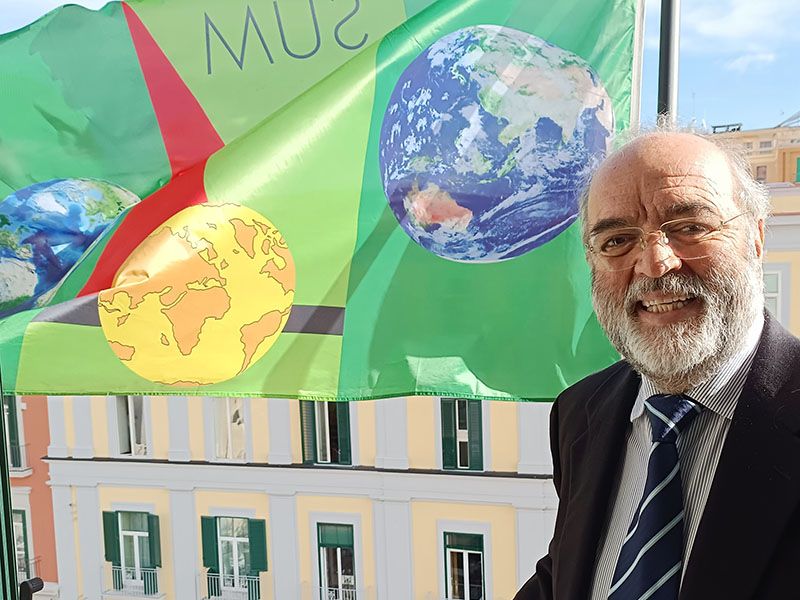
This is a fundamental step on the road to the 2026 Naples Summit – at the headquarters of the “United States of the World” – where these energies and proposals will converge to give shape to a true constituent phase of the United States of Europe.

Read more: ...

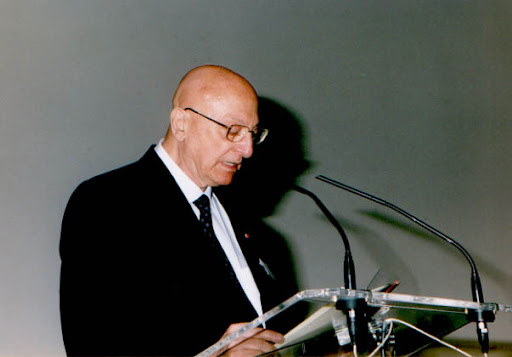
A Lectio magistralis by Cardinal Secretary of State Pietro Parolin opened the conference ‘The diplomatic action of the Holy See in the face of new global challenges’, organised by the Pontifical Ecclesiastical Academy: Peace and justice, voices that continue to rise in different regions of the planet as pillars of order among actions. The denunciation of the use of force to resolve conflicts, the need for solutions that are educational, formative and research-based. Diplomacy as a way to build the common good and, for those who work in the Holy See, the commitment to share people's pain and heal it with evangelical hope. These are some of the points that Cardinal Pietro Parolin highlights in his Lectio magistralis focused on ‘Peace and justice in the diplomacy of the Holy See in the face of new challenges.’ The Secretary of State spoke at this morning's conference, 17 January, in the Ducal Hall of the Apostolic Palace, on the occasion of the 325th anniversary of the founding of the Pontifical Ecclesiastical Academy.
Cardinal Parolin's key words were: "The prevailing multipolarism leads to armed peace or to the establishment of an attitude of mutual distrust between states. We need foresight and healthy realism to be peacemakers".
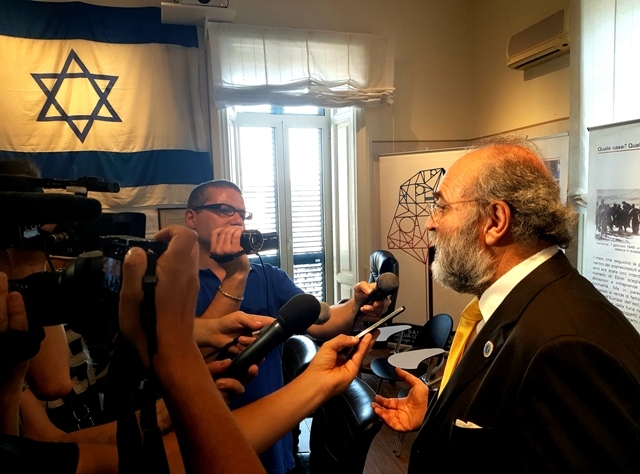
Secretary-General Michele Capasso emphasised the importance of the content of the letter that Pope Leone XIV sent to the participants and the words of hope that Cardinal Parolin addressed to the diplomats of the Holy See: I repeated to them a phrase that is dear to me and that has characterised our actions from the beginning: ‘Do much, say little’.
‘We find in Cardinal Parolin's Lectio,’ Secretary General Capasso told the press, "the expression according to the lesson of Pope Alexander VII "Do much, say little", when he hopes that “the Holy See's response will remain that of effective and discreet diplomacy, which sees in every level of activity and responsibility the possibility of seeking ways and means to ensure an international order based on justice, in which the principle and goal of coexistence is peace, operating according to the principles, customs and respect for the rules of diplomacy”.
This, Capasso concludes, ties in with the pastoral perspective referred to by Pope Leone XIV in his aforementioned letter: “The diplomatic service is not a profession, but a pastoral vocation: it is the evangelical art of encounter, which seeks paths of reconciliation where men raise walls and mistrust”.
This is the same path we have been following for forty years with the “United States of the World” and which we will continue to follow: “DO MUCH, SAY LITTLE”."

Read more: ...

It is the priority action of the "United States of the World", consisting of a headquarters and a network of thematic offices on five continents.
The concept/project of the "House for Peace" was born in 1999 from the ambitions of the United States of the World, positioning itself as a complementary proposal in support of existing initiatives.
The concept, accompanied by specialist contributions aimed at confirming its feasibility, not only responds to the concrete needs of the headquarters of the “House for Peace”, but also envisages the creation of a network of units of different sizes strategically located in carefully chosen places. Each location has its own unique expression, always with iconic and at the same time paradigmatic characteristics from an ecological and functional point of view, open to the future. The fundamental objective is to introduce a network of places for peace capable of combining memory with the future: a memory that is not limited to the “remembrance of peace” but becomes a gesture, a word, a shared responsibility. Each location will be dedicated to a theme linked to places and memory: the memory of the mothers of victims, the commitment to ecological conversion, the value of ancient crafts, and so on.
All this fits into the utopia/peace relationship: a dream, an aspiration, an evolution, an ideal, a passion to which to devote one's life, a constant effort to overcome the limits of reality and move towards action that is not incidental, in which one must invest with conviction, resisting any scepticism which, fortunately, is still unknown to young people, the creators of our future and heirs to this peace initiative.

Read more: ...

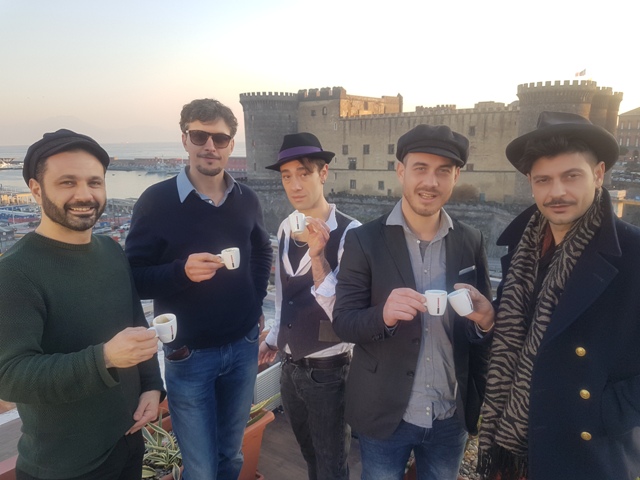
In front of his legendary "Chalet Ciro", the final farewell was given to Don Antonio De Martino: a central figure, owner and soul of the historic chalet in Mergellina. 
A dear friend of the Foundation, he was a visionary who accompanied us through the difficult moments of our peace mission, sweetening complex peace negotiations with his delicacies. He was always ready to intervene in person at meetings, dinners and gatherings with heads of state and government, ambassadors and representatives of international organisations.
His and his son Ciro's participation in the celebrations for the 25th anniversary of our Foundation, together with the 20th anniversary of the United Arab Emirates for diplomacy, was extraordinary: the Grand Hotel in Rome became the venue for Chalet Ciro and suddenly graffe, ice cream and desserts invaded the distinguished audience: from the then President of the Senate Pietro Grasso to H.E. Jamal Sanad Al Swaidi and many others.
A collection of photos preserves the memory not only of a successful entrepreneur, but also of a true guardian of Neapolitan tradition, capable of transforming a small seaside establishment into a global benchmark for sweet gastronomy.  
His historic motto, "I Make You Happy", will forever remain the symbol of "artisan intelligence" — as Don Antonio liked to define his business — and Chalet Ciro will continue to exist in the spirit of Antonio's history and example, keeping alive the scent of knowledge, traditions, and history that made him a legend and will continue to do so.

Read more: ...