Maison de la Paix || Casa Universale delle Culture (EN)


CASA UNIVERSALE DELLE CULTURE

The Maison de la Paix - Casa Universale delle Culture is a place strongly representative, in which will convey the knowledge of the different identities and cultures, structuring permanently initiatives aimed at the spreading of peace, necessary for the shared development.

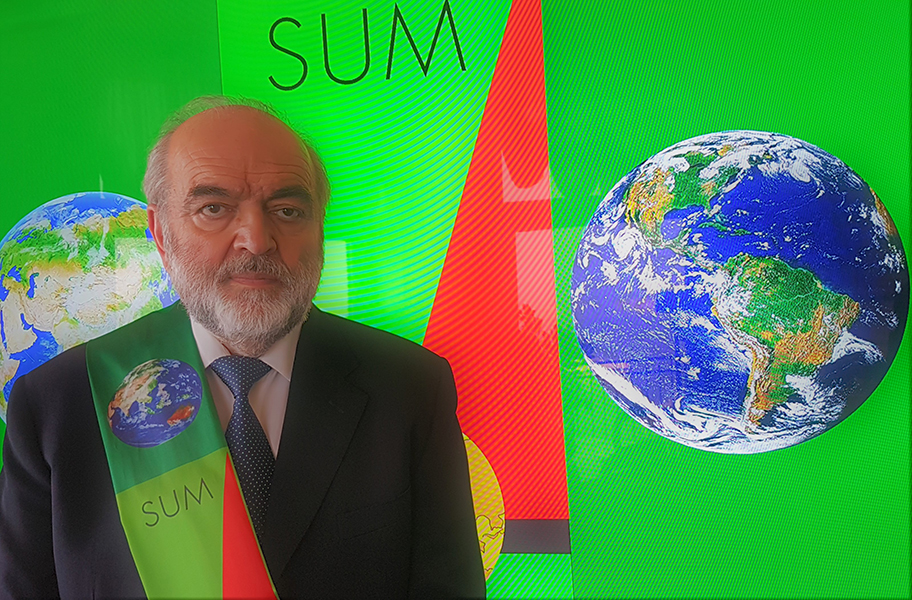
The Maison de la Paix - Casa Universale delle Culture (MdP) is a project conceived by Michele Capasso, approved by many Countries and international organizations. It is an architecture that keeps the memory of many Peace activities which created history, often more than the wars, but it is – above all – a space "to build” Peace.

The architectonical complex has an important symbolic worth: it represents the Countries of the World engaged in the Peace process and the Countries victim of the conflicts.

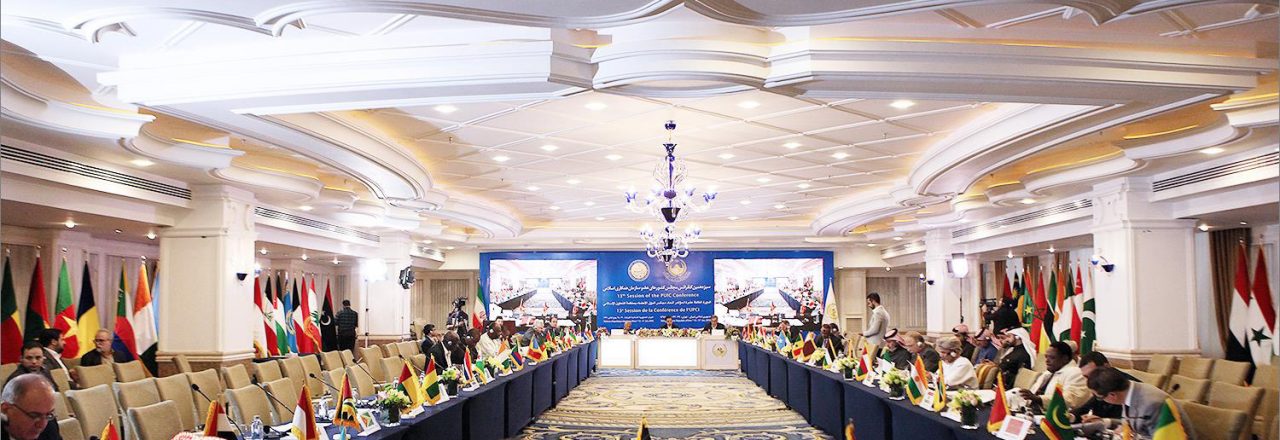
Proposed by the Fondazione Mediterraneo with the Maison des Alliances – together with the main adherent organizations, such as the Mediterranean Parliamentary Assembly, the League of Arab States, the "Anna Lindh" Euro-Mediterranean Foundation and others, the MdP represents a referent point for all the ones who dedicate their lives to peace.

The symbol of the MdP is the "Totem for Peace", an artwork by the Italian sculptor Mario Molinari which the Fondazione Mediterraneo is promoting all around the world, creating the network of the "Cities for Peace".

The first seat of the MdP was inaugurated on the 14th of June 2010 (Maison de la Paix - Casa Universale delle Culture) in the historical building of the Grand Hotel de Londres in Naples.

The action of the Maison de la Paix - Casa Universale delle Culture aims at improving the main activities of the "Universal Forum of Cultures" in: Barcelona (2004), Monterrey (2007), Valparaiso (2010) and Naples (2013).

The Maison de la Paix performs most of the initiatives jointly with the Maison de la Méditerranée.


It is the priority action of the "United States of the World", consisting of a headquarters and a network of thematic offices on five continents.
The concept/project of the "House for Peace" was born in 1999 from the ambitions of the United States of the World, positioning itself as a complementary proposal in support of existing initiatives.
The concept, accompanied by specialist contributions aimed at confirming its feasibility, not only responds to the concrete needs of the headquarters of the “House for Peace”, but also envisages the creation of a network of units of different sizes strategically located in carefully chosen places. Each location has its own unique expression, always with iconic and at the same time paradigmatic characteristics from an ecological and functional point of view, open to the future. The fundamental objective is to introduce a network of places for peace capable of combining memory with the future: a memory that is not limited to the “remembrance of peace” but becomes a gesture, a word, a shared responsibility. Each location will be dedicated to a theme linked to places and memory: the memory of the mothers of victims, the commitment to ecological conversion, the value of ancient crafts, and so on.
All this fits into the utopia/peace relationship: a dream, an aspiration, an evolution, an ideal, a passion to which to devote one's life, a constant effort to overcome the limits of reality and move towards action that is not incidental, in which one must invest with conviction, resisting any scepticism which, fortunately, is still unknown to young people, the creators of our future and heirs to this peace initiative.

Read more: ...

In front of his legendary "Chalet Ciro", the final farewell was given to Don Antonio De Martino: a central figure, owner and soul of the historic chalet in Mergellina. 
A dear friend of the Foundation, he was a visionary who accompanied us through the difficult moments of our peace mission, sweetening complex peace negotiations with his delicacies. He was always ready to intervene in person at meetings, dinners and gatherings with heads of state and government, ambassadors and representatives of international organisations.
His and his son Ciro's participation in the celebrations for the 25th anniversary of our Foundation, together with the 20th anniversary of the United Arab Emirates for diplomacy, was extraordinary: the Grand Hotel in Rome became the venue for Chalet Ciro and suddenly graffe, ice cream and desserts invaded the distinguished audience: from the then President of the Senate Pietro Grasso to H.E. Jamal Sanad Al Swaidi and many others.
A collection of photos preserves the memory not only of a successful entrepreneur, but also of a true guardian of Neapolitan tradition, capable of transforming a small seaside establishment into a global benchmark for sweet gastronomy.  
His historic motto, "I Make You Happy", will forever remain the symbol of "artisan intelligence" — as Don Antonio liked to define his business — and Chalet Ciro will continue to exist in the spirit of Antonio's history and example, keeping alive the scent of knowledge, traditions, and history that made him a legend and will continue to do so.

Read more: ...

Secretary-General Michele Capasso attended the farewell ceremony for Vincenzo Salamone, President of the Campania Regional Administrative Court.
On this occasion, attended by the highest civil, military and religious authorities, President Salamone's commitment to promoting administrative justice that increasingly serves the needs of the people was remembered.

Read more: ...

Jal el Dib. De la Croix Hospital. 2 December 2025. 9 a.m. The Holy Father arrives at the main entrance of the Congregation's residence by car. The nuns run to meet him and one throws her arms around his neck. Sister Marie, together with the hospital director, Sister Rose Hanna, and the superior of the convent, Sister Hiam El Badawi, accompany the Pope to the theatre, where he is given a festive welcome: the hall resounds with zaghroutah, the shouts typical of Middle Eastern women, a sign of happiness and great celebration.
Sister Marie thanks the Pontiff for his presence, which confirms God's love for the poorest of the poor, the most abandoned and the most suffering; then she recalls the founder Abouna Yakub, who said: "My religion is Lebanon and the suffering". Finally, she thanks the Holy Father once again for being "the 'father' of the forgotten, the abandoned and the marginalised".
The Holy Father receives 77 handmade rosaries from the patients as a gift, then listens to their testimonies and is moved.
"I am happy to meet you, it was my wish, because Jesus lives here: both in you who are sick and in you who care for you, the nuns, doctors, all the healthcare workers and staff", he began in French, assuring them that all the people of the Lebanese hospital are in his heart and in his prayers. The Pope also recalls the holiness of the founder's life and his testimony carried on by the Franciscan sisters.
Port of Beirut. 2 December 2025. 9.30 a.m. After the emotions of the Hospital de la Croix, we find ourselves among the rubble of the port of Beirut, where on 4 August 2020 a terrible explosion caused more than two hundred deaths, seven thousand injuries and more than three hundred thousand displaced persons, shocking Lebanon and the whole world.
Here, the Pope comes to bring comfort to a pain caused by a wound that is still open for everyone.
The Pope prays before the marble monument that bears the names of the dead, one by one. He lays a wreath and greets the survivors and the families of the victims. Everyone is holding photographs of their missing relatives. The emotion is strong. The Pope greets the families of those who lost their lives one by one, a simple gesture but one full of human closeness: he kneels in front of a child and takes the photo of his father that the little boy is holding in his hands. A mother embraces him. It is a moment of deep emotion that marks one of the most symbolically powerful moments of the Holy Father's trip to Lebanon.
Beirut Waterfront. 2 December 2025. 10.30 a.m. The impact is powerful. Thousands of people fill the esplanade overlooking the sea. The altar is housed in a large white covered structure and the Pope is surrounded by many words of “Peace” in the main languages surrounding the larger inscription “Blessed are the peacemakers”: the theme of this first Apostolic Journey.
After the celebration, Pope Leone XIV addressed this final greeting to the crowd:
“Dear brothers and sisters, during these days, with my first Apostolic Journey undertaken during the Jubilee Year, I wanted to be a pilgrim of hope in the Middle East, imploring God for the gift of peace for this beloved land, marked by instability, wars and pain.
Dear Christians of the Levant, when the results of your efforts for peace are slow in coming, I invite you to lift your gaze to the Lord who is coming! Let us look to him with hope and courage, inviting everyone to set out on the path of coexistence, fraternity and peace. Be builders of peace, heralds of peace, witnesses of peace!...".

Read more: ...