All Events and Initiatives || Year by Year

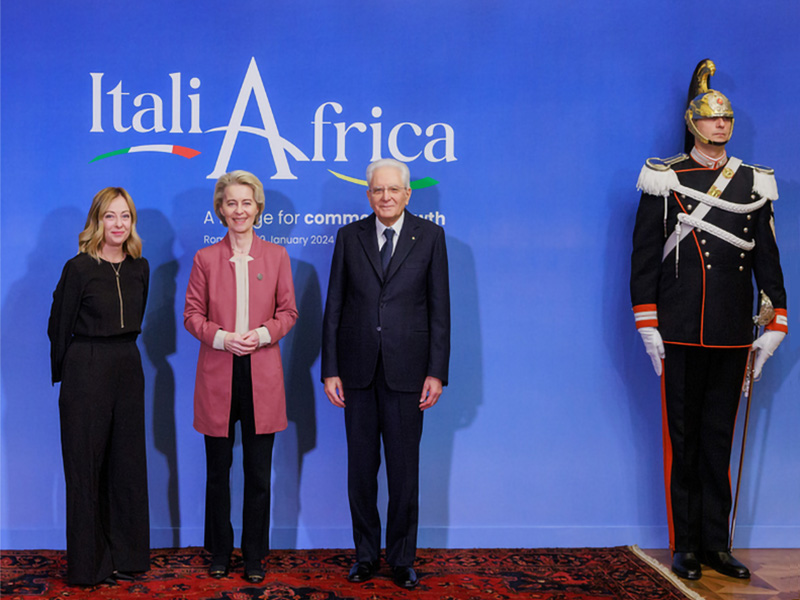
The President of the Republic, Sergio Mattarella, visited the ruins of Pompeii: accompanied by his daughter Laura, he took a private tour of the archaeological site this morning, guided by director Gabriel Zuchtriegel. During the visit, he met and shook hands with Maurizio Patriciello.

Read more: ...

The Pope arrived punctually shortly after 9 a.m. at the Sultan Ahmed Mosque, one of the most symbolic places in Istanbul, staying for about fifteen minutes. A visit experienced "with deep respect for the place and the faith of those who gather there in prayer". Accompanying the pontiff were the Minister of Culture and Tourism, Ersoy, the Mufti of Istanbul Tuncel, Imam Fatih Kaya and some members of the "United States of the World". 
Barefoot, with his hands at his sides and his head turned upwards - looking at the 21,043 turquoise ceramic tiles - Pope Leone XIV entered the so-called "Blue Mosque", one of the most symbolic and evocative monuments of the Turkish metropolis, previously visited by Pope Benedict XVI in 2006 and Pope Francis in 2014.
The papal entourage also included Cardinals Kurt Koch and George Koovakad, respectively prefects of the Dicastery for Promoting Christian Unity and the Dicastery for Interreligious Dialogue. Everyone paused for a long time in front of the muḥazīn pulpit, with Aşkın Tunca explaining the architecture and function of this space from which the faithful are called to prayer. The Pope then passed in front of the "Mihrab", the marble niche that indicates the direction of Mecca, which also contains a Sura – number 19 – that refers to the Virgin Mary. He continued his tour, looking several times at the dome and the ceiling, which is over 23 metres high.
At this moment, we recalled other visits to this Mosque.
In the afternoon, at 4 p.m., in the Patriarchal Palace, an important act in the path of interreligious dialogue took place: Pope Leo XIV met with Patriarch Bartholomew I and together they signed a joint declaration on the theme of peace and dialogue.
Pope Leo XIV's day ended with the celebration of Holy Mass in the Volkswagen Arena: thousands of people attended the event and we sat in the front rows, aware of the moment we were experiencing. In his homily, the Pope said, among other things:
“Dear brothers and sisters, we celebrate this Holy Mass on the eve of the day when the Church commemorates Saint Andrew, Apostle and Patron Saint of this land. At the same time, we begin Advent, preparing ourselves to relive, at Christmas, the mystery of Jesus, Son of God, “begotten, not made, of one substance with the Father” (Nicene-Constantinopolitan Creed), as the Fathers gathered at the Council of Nicaea solemnly declared 1,700 years ago. In this context, the Liturgy offers us, in the first reading (cf. Is 2:1-5), one of the most beautiful pages of the book of the prophet Isaiah, where the invitation to all peoples to ascend the mountain of the Lord (cf. v. 3), a place of light and peace, resounds. I would therefore like us to meditate on our being Church, focusing on some of the images contained in this text. The first is that of the “mountain exalted above the mountains” (cf. Is 2:2). It reminds us that the fruits of God's action...”.

Read more: ...

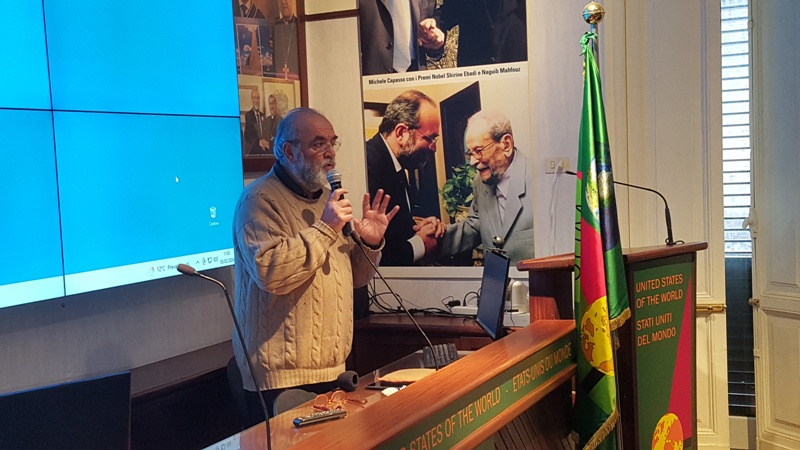
During bassist Gerald Leon Cannon and his wife Minnie's visit to the Museum of Peace and the “Pino Daniele Alive” section, using Rino Zurzolo's bass guitar donated to the museum by his wife Valentina, the great American musician performed several songs – including Pino Daniele's “Quando” – with Elisabetta Serio, Pino's long-time pianist.
"The video and photos by Riccardo Piccirillo are splendid", said President Michele Capasso, who welcomed the guests.

Read more: ...

On the occasion of bassist Gerald Leon Cannon and his wife Minnie's visit to the Museum of Peace, President Michele Capasso presented them with copies of his books "Bosnia" and "Raffaele, il sindaco".
The great American musician was moved by the story of the mayor who rebuilt San Sebastiano al Vesuvio after the destruction caused by the eruption of Vesuvius on 19 March 1944.

Read more: ...

The first meeting with Pope Leone XIV takes place early in the morning in the Cathedral of the Holy Spirit. We take our places in the right aisle of the Catholic cathedral, seat of the Apostolic Vicariate of Istanbul.
The Holy Father is excited and moved by the warm welcome and embraces the nuns and bishops with great enthusiasm.
This trip is ‘unusual’ for us because, not following the Pope's official delegation, we have to anticipate the next stages. We therefore leave the cathedral and head for the home for the elderly run by the ‘Little Sisters of the Poor’, where the second stage of the day takes place.
'Dear sisters and brothers, good morning! I sincerely thank you for Sister's words of welcome and for the welcome shown by all of you. Hospitality is the gift of this home! A gift that comes from God and is made fruitful by the Little Sisters of the Poor, the staff and benefactors, and also by all the guests, in their daily life together. Thank you all!'
With these words, the Pope embraces the community of elderly people, the faithful and the Little Sisters of the Poor present in the chapel of the shelter.
Before concluding, we drive to Iznik-Nicaea: the most important stop of the day.
İznik. 12 noon. We arrive in this small town after a two-hour journey and numerous checkpoints set up to ensure the safety of the papal visit, which coincides with the 1700th anniversary of the first council, with an ecumenical prayer meeting scheduled to take place near the archaeological excavations of the ancient basilica of St Neophytos.
About 300 bishops participated in the First Council of Nicaea to resolve the problems raised by Arianism. They arrived at a declaration of faith, which was given the name Nicene Creed, recognising the consubstantiality between the Father and the Son and condemning Arius.
We are standing on the platform near the remains of the basilica where the Pope has arrived. After the ecumenical prayer and the speech by Patriarch Bartholomew, Leo XIV reads his speech:
“Dear brothers and sisters! In a time that is dramatic in many ways, in which people are subjected to countless threats to their very dignity, the 1700th anniversary of the First Council of Nicaea is a precious opportunity to ask ourselves who Jesus Christ is in the lives of women and men today, who he is for each of us... I am deeply grateful to His Holiness Bartholomew, who, with great wisdom and foresight, decided to commemorate the 1700th anniversary of the Council of Nicaea together in the very place where it was celebrated; and I warmly thank the Heads of Churches and Representatives of World Christian Communions who accepted the invitation to participate in this event. May God the Father, almighty and merciful, hear the fervent prayer we offer him today and grant that this important anniversary may bear abundant fruit of reconciliation, unity and peace.

Read more: ...