The MAMT- Mediterranean Museum of Art, Music and Traditions is an institution created by the Fondazione Mediterraneo with the aim “to experience” in an interactive way, the positive emotions of Our Sea through Arts, Music and Traditions. The MAMT is one of the most important initiatives of Fondazione Mediterraneo: an active space created in order to let communicate Arts, Music and Traditions of the Mediterranean contemporary society. The awareness of a past full of ancient traditions is the base for the construction of a rational and connected humanity: the vastness of the Mediterranean area collects together the responsibility, the hard work and intelligence with the ability to share spaces and cultures. Today, more than ever, the sense of future is given by the awareness of the sorrow, of the conflicts and at the same time by the ability to share joys and bond.
Art and Music are since ever the tool of communication and sharing of the humanity that, in a particular “Mediterranean” path, allows us to overtake the violence of the human being that showed itself in his greater brutality in countries as Bosnia, Palestine, Syria and other places: as testify of this there are Bosnia, in order not to forget and Suffering and Hope in the world, exhibitions of the museum.
At the same time there are symbols inviting to meeting and hope appear in lands of desolation and Hush: The Ferrigno Nativity Scene, the exhibition a Sea, three Faiths, the Peace and the Last Neapolitan Supper are part of the Museum.
Near the Totem of Peace and other works by Mario Molinari, sculptor of the color, accompanies the lonely journey of freedom, the Dreamlike World of John Crown and the desire of participation and recognition of the role of women in the Mediterranean in the exhibition “Breaking the Veils, women artists of Islamic World”.
Fado, Flamenco, Tango and Sirtaki, the Song of Naples, the Great Lyric Operas, Arabic Music and the Classics of all the times catch the attention of the audience with the acoustic perfection of the “Music hall” of the Museum.
The section dedicated to Pino Daniele has a particular meaning.
The warm of the Mediterranean human nature and the awareness of the necessity to keep track, the the wealth and the fertility find in the “Section Architecture” – with the Associated presences of Alvaro Siza, Ciamarra Picas, Vittorio Di Pace, Nicola Pagliara, Marco Introini and others - and in the Voices of the Migrants and other strong point.
The artworks of Pietro and Rino Volpe mark Mediterranean signs in which the culture and the literature merge with the creativity making a unique collection.
A collection of HD video about the most important sites of the Campania Region will accompany the tourists of cruises and the visitors in the whole building: the ground floor facing on Municipio Square will host an info-point unique in its kind. The MAMT is also an articulated system of services in the heart of the city of Naples: the library, the emeroteque, the music hall, salt conventions, the restaurants, the Euromedcafé, the residences and the bookshop receive the visitor with sympathy and enthusiasm: that enthusiasm of the Mediterranean!


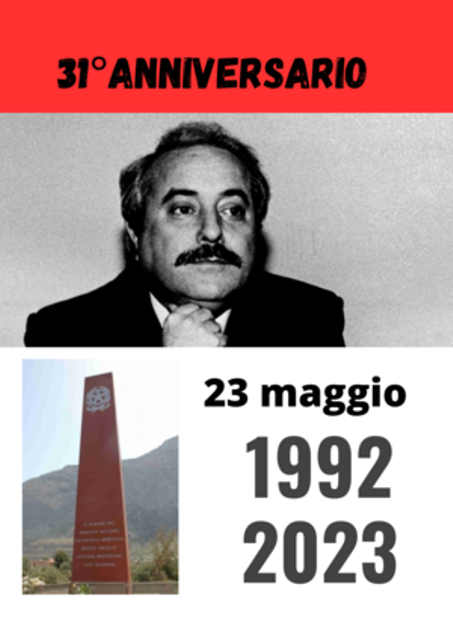 The "Day of Legality" was held at the Museum of Peace - MAMT with a commemorative ceremony to mark the 31st anniversary of the Capaci massacre.
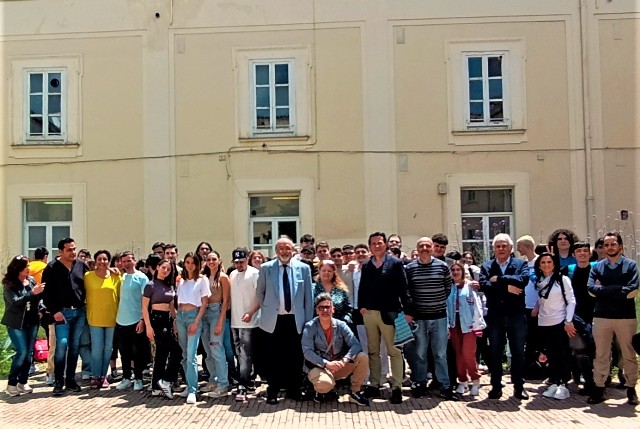 The Secretary-General Prof. Michele Capasso and Dr. Pia Molinari spoke at the closing of the project "Travelling with Parthenope", which saw the collaboration of the United States of the World and the Fondazione Mediterraneo with stops held at the Peace Museum and in front of the monumental work "Totem for Peace" by sculptor Mario Molinari.
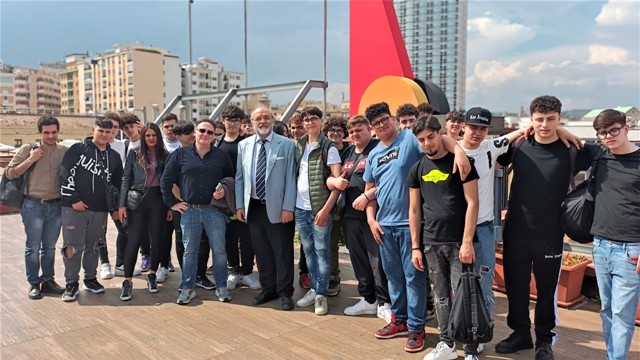 Students and teachers from the State Agricultural Technical Institute "De Sanctis-D'Agostino" in Domicella (AV) visited the Peace Museum and the headquarters of the "United States of the World.
 A ceremony was held at the headquarters of the United States of the World and the Museum of Peace in memory of architect Vittorio Di Pace, who passed away at the age of 106 on 21 May 2013.
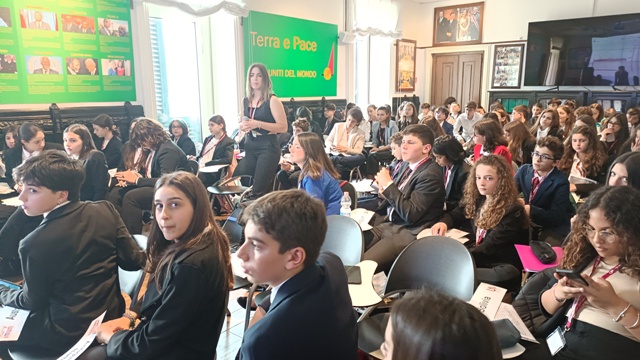 Students from various middle schools in Southern Italy gathered at the United States of the World Headquarters and the Museum of Peace for a simulation of the "United Nations" programme.